
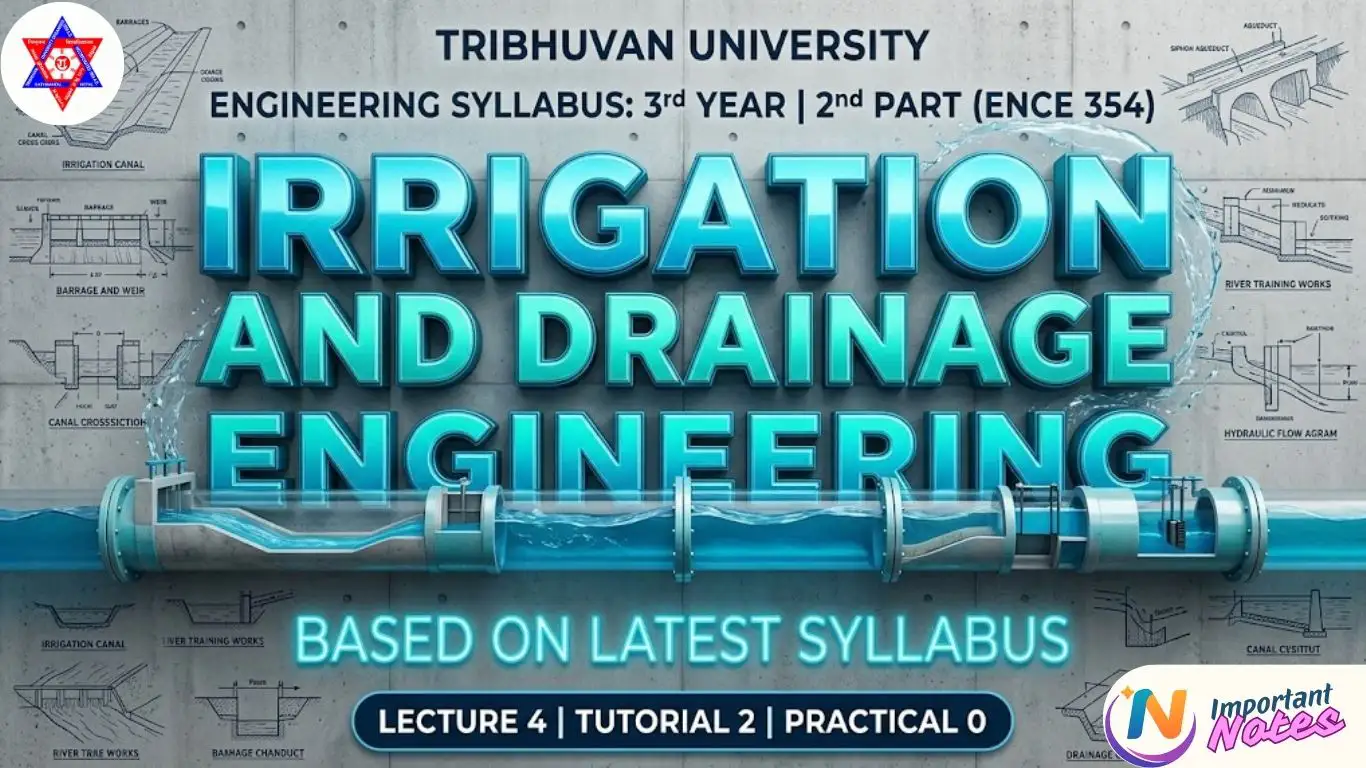
Irrigation and Drainage Introduction: Complete Notes
About this Chapter
Welcome to the introductory chapter of Irrigation and Drainage Engineering. This subject forms the backbone of agricultural advancement and water resource management, especially critical for countries heavily reliant on agriculture like Nepal.
In this module, you will learn the foundational concepts of Irrigation and Drainage, including why we need artificial water application, the severe disadvantages of over-irrigation such as waterlogging, and the intricate cropping patterns used locally. By understanding crop seasons, commended areas, and project planning, civil engineers can design efficient water distribution networks.
Why Study Irrigation and Drainage Engineering?
Mastering the principles of Irrigation and Drainage Engineering is essential for optimizing crop yield while maintaining soil health. Efficient irrigation systems ensure that crops receive the right amount of water at the right time, circumventing the unreliability of rainfall.
This chapter emphasizes several crucial elements:
- Waterlogging Prevention: Understanding how excess water suffocates plant roots and learning the drainage techniques to mitigate it.
- Nepalese Context: Exploring the current status, needs, and geographical challenges of deploying irrigation networks across the varied terrain of Nepal.
- Command Areas & Intensity: Calculating Gross Command Area (GCA) and Culturable Command Area (CCA) to plan sustainable water distribution limits.
Utilize the expert notes compiled by Prof. Debi P Bhattarai provided below. These documents contain practical insights and theoretical definitions that perfectly align with the ENCE 354 university syllabus requirements.
Disclaimer
The educational materials provided on this website are intended as supplementary resources to support your learning journey in Irrigation and Drainage Engineering and other civil engineering fields. These study materials are sample documents designed to help students understand complex concepts.
We have made every effort to ensure the accuracy of the content. However, we recommend students to refer to standard textbooks and consult with professors for authoritative explanations. These materials should be used as references only.
We respect intellectual property rights. If you believe any content should be credited differently or removed, or if you are the author and wish for these notes to be removed, please don’t hesitate to contact us. We are happy to make appropriate corrections or give proper attribution.